


Q4 2025 Hawaiʻi Real Estate Market Report — A Market Finding Its Balance

As we close the books on 2025, the latest quarterly data gives us a clear picture of where our island real estate market stands. The Q4 2025 Hawaiʻi Real Estate Market Report, released by Hawaii Life, confirms what many of us working in the field have been feeling throughout the year: the market has shifted from the frenzied pace of the post-pandemic years into something far more measured and balanced.
There were no shocking surprises in the numbers. Instead, we see trends that began earlier in 2024 continuing into 2025—inventory growing, buyers becoming more selective, and sellers adjusting expectations. Homes are still selling, but strategy matters more than ever.
Below is a closer look at what happened in the final quarter of the year and what it means for buyers and sellers heading into 2026.

Download a full copy of the report here:
The State of the Market on Hawaiʻi Island
The real estate market on Hawaiʻi Island remains active, but the urgency we saw in previous years has cooled. Buyers now have options, and when options increase, decision-making slows down. This is not a negative development—it is simply a normalization after several unusually intense years.
There are different things to do on the island depending on where you are. The marketplaces on the west side, the settlements on the Kohala Coast, and the areas on the east side all move at various speeds. Still, the big picture shows that a slower, more sustainable pace is better.
Across the island, activity varies by location. West-side resort markets, Kona, Kohala Coast communities, and East-side areas all move at different speeds. Still, the overall picture points toward a healthier, more sustainable pace.
Inventory has expanded modestly, homes take longer to sell, and pricing has leveled off in many segments. For buyers, this means more negotiating room. For sellers, preparation and pricing are now critical.
Residential 3m+ Luxury Market Overview

"Hawai'i Island's $3M+ market remains active, with demand centered on spaciousness and setting."
Let’s begin with the luxury segment, which is always different from the rest.
In Q4 2025, there were 68 sales in the $3M+ residential market. Buyers wanted privacy, land, and great locations, especially oceanfront homes and large-acreage properties suited to long-term ownership rather than quick resale.
The median sold price in this group went up 20.6% from the previous year to about $6.15 million. It sounds like a growing industry on the surface, but there are nuances.

When you look at Q4 in 2025 compared to preceding quarters:
Median sold price increased by roughly $200,000.
Inventory rose.
Days on market also increased.
Price per square foot edged slightly downward.

This tells us something important: the people who buy at this level are fewer and more focused on value. Buying things is more about how they fit into your life than how much money you can make off of them. People are willing to pay for great houses, but they take their time and make sure they get the best deal.
The small decline in price per square foot may indicate that sales are being driven by larger estates or residences with land rather than by very expensive trophy homes. It looks like buyers are more interested in useful space and long-term satisfaction than in prestige alone.
In other words, luxury is active—but thoughtful.
Residential Submarket Snapshot

Residential Market Snapshot
"The Hawai'i Island market reflects a balanced pace as inventory expands modestly."
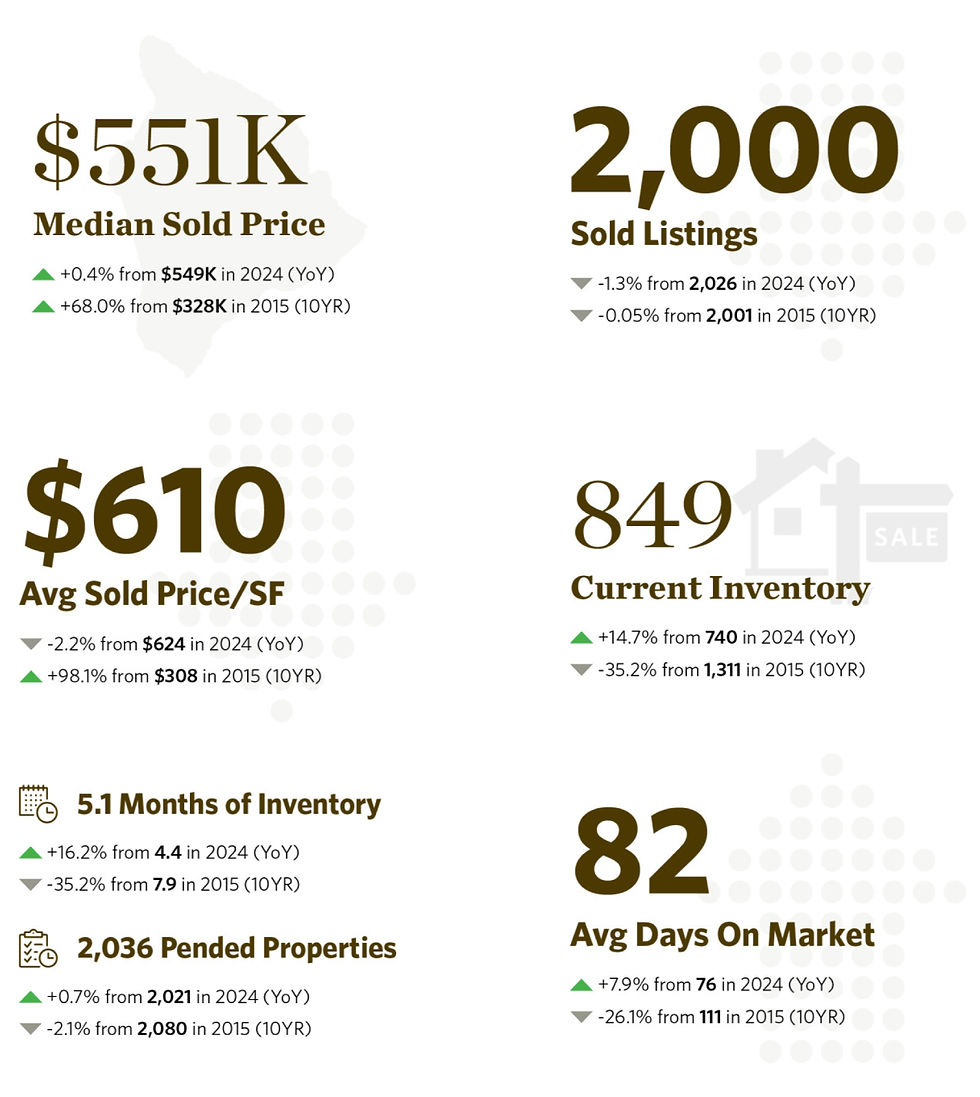
The broader residential market paints an even clearer picture of stabilization.
Quarter-over-quarter comparisons show:
Median sold prices are trending slightly downward.
Price per square foot is easing.
Inventory rising.
Sold listings are increasing modestly.
Days on market are getting longer.

This combination confirms what many realtors have been experiencing: properties are selling, but buyers are taking their time and considering their options.
Let’s break down the main indicators.
Residential Market Overview

Median Sold Price
The median sales price was $551,000, only 0.4% higher than the same time last year. Growth that is basically flat.
But statistics for the whole island can be deceiving because the prices in the East and West side markets are very different. Changes in where homes sell can affect the median value of all residences.
Still, stability rather than rapid appreciation is now the dominant story.
Average Price Per Square Foot
The average price per square foot decreased slightly to $610, a 2.2% drop from the previous year.
This slight drop is probably due to the mix of homes that are selling, not because prices are going down. More homes that are larger or in cheaper areas can push down averages without indicating that prices are weak.
Move-in-ready homes remain especially attractive. Buyers continue to favor turnkey properties over renovation projects, especially given elevated construction costs.
Inventory
Inventory went up by about 15% from the previous year, reaching 849 active listings.
Having more inventory provides buyers with more time. They can look at other properties, discuss repairs, and make decisions without rushing.
For sellers, however, competition increases. Homes must now stand out in presentation, condition, and price.
Days on Market (DOM)
The average number of days on the market increased to 82, which is nearly 8% more than the previous year.
This rise doesn’t always mean that demand is poor. Instead, it shows that customers are being smart and making good decisions.
Well-priced homes still move quickly. Properties that linger often require price adjustments or improvements.
Months of Inventory
Months of inventory increased from 4.4 to 5.1 months.
This level generally signals a balanced market—not strongly favoring buyers or sellers. Transactions continue steadily, but neither side holds overwhelming leverage.
10 Year History
One statistic that often gets lost in quarterly conversations is the long-term trend.
Over the past 10 years, the median price of homes sold on Hawaiʻi Island has increased by 68%.
There are ups and downs in the short term, but living on an island is still quite appealing in the long run. Property values are still high because there isn’t much land available, people want to live in certain areas, and people are steadily moving there.
Patience often rewards both buyers and sellers who approach the market strategically.
Sales by Property Type

It’s also important to note that sales volumes fell across all property types from one year to the next.
This slowdown is in line with higher interest rates and buyers being more cautious than during the pandemic. But activity is still strong compared to long-term averages.
The market is active—just not overheated.
Be sure to check out my listing in Puako — the one and only Puako Beach Condo with an active vacation rental license!

Looking Forward
"Hawai'i Island enters 2026 with a steady, balanced backdrop."
Heading into 2026, the outlook remains steady.
Buyers are active but patient, focusing heavily on value and move-in-ready homes. Sellers who prepare properties properly and price realistically continue to succeed.
Inventory and local pricing variations will likely shape how quickly different regions move. Resort markets, entry-level housing, and mid-range homes may behave differently, but overall conditions point toward continued balance.
What I Get Out of This Data
From my perspective, working daily with buyers and sellers across the island, none of these trends is surprising.
We started noticing this change in 2024, and by 2025, it was evident what was happening. There are more properties for sale, buyers are taking longer to buy them, and they are being more picky.
But the main point is that buyers are still very much present.
Homes sell when they are priced correctly and presented well. Properties that sit on the market frequently don’t sell because of price or condition, not because of demand.
The lesson for sellers is preparation. Homes that are clean, well-kept, and reasonably priced stick out right away. Listings that are too expensive just get old.
This market gives buyers an opportunity. You can bargain, take your time to examine possibilities, and have a better chance of finding the right home without bidding wars.
In my view, this is actually a healthier market environment. People think carefully about transactions, both parties negotiate fairly, and long-term homeowners—not speculators—drive activity.
Hawaiʻi Island is still one of the best destinations to live, invest, and retire. The value of lifestyle here stays the same, even while markets change.
As we move into 2026, I expect steady activity rather than dramatic swings. Buyers and sellers who understand current conditions—and work with experienced local guidance—will continue to find success.
And as always, I’m happy to help interpret what these numbers mean for your individual situation.
Download the full report below.
Ta Da!
Aloha,
Jan


Comments